My favourite students- Part I

I was reminded yesterday that I have been pretty lax in posting on this blog, though more from lack of motivation than from an absence of interesting occurrences. So, with this in mind, I decided to write an update. And not just any update. No. An update about a positive subject (Fear not, I doubt this will become a regular theme!).

A few months ago, I wrote a post about my three least favourite students, and so, for the sake of completeness, I thought I should write a post about my favourite students.
05163e829ceab86584888c43d6340484a401f2-wm

Disclaimer- in some respects, I feel ashamed to admit that I have favourite students. It doesn’t seem fair or just. But this being said, I think it’s inevitable that just as I prefer certain adults to certain other adults (this is, after all, the difference between friends, acquaintances, and enemies), it’s probably not a surprise that I prefer certain kids over others.

But, let me just say, whilst I might like some students more, when grading papers or giving marks or asking questions in class, I am scrupulously fair.

247032

OK, with these caveats in place, I am going to write about my first favourite student, who I’ll call Matías.

Matías was in the (somewhat infamous) Grade 5 class (which also contained José Luis). I didn’t notice him at first, as he wasn’t particularly remarkable. He came to class every day. He wasn’t the best student. He wasn’t the worst. He was smart, certainly. But he wasn’t noticeable. He was just kind of, well, there…
36922B4500000578-0-image-a-1_1469438279714.jpg

But, about four months into my stint at the school, he approached me, and asked for my autograph. I thought this was a bit odd, and the class teacher recommended that I write something fake, lest Matías be up to something devious. So I wrote a dreadful false signature,  inscribed “To my favourite student, Mateo!”

It was THAT bad. I didn’t even know his name!

But after this incident, I began to pay more attention to my “fan.” And I realised that Matías was actually a lovely kid. So I guess it’s no surprise that within a few weeks, he had become my firm favourite.

And he still is.

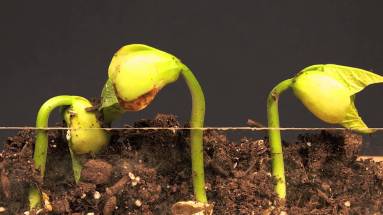
What I like about Matías is that he doesn’t worry about what others think of him. For instance, after the autograph incident, the class were doing a project on beans. They had four different types of beans- lima, black, green, and chickpeas- on pieces of cotton wool, and the idea was to guess which would sprout the fastest.
maxresdefault.jpg

Let’s just say, the level of interest in the class was pretty low.

Except from Matías.

Every day, he would come to the teacher’s table, and see if he could water the beans. I’d ask him which was growing the fastest, and when there was a sprout, I inquired if he knew why one was growing more rapidly than another. Talking to Matías, I realised that, crazy as it may sound, he was seriously, genuinely interested in the beans. And when it was the school holidays, and someone had to take the beans home, I knew EXACTLY who to nominate…

But when Matías returned from the holidays, I was a bit shocked, because he had:

  • removed each of the little bean plants from the communal pot;
  • planted them in individual containers; and (my heart skips a beat just writing this)
  • tied them all up with tiny stakes, to give them extra support.

beans.jpg

!!!!!!

I probably sound pathetic, because I can’t express myself adequately. But what I like about Matías is that he’s a total individual. He liked the beans, and that was all that mattered. If someone made fun of him, he didn’t listen, because he was too cool for that. And I don’t mean too cool in a “Wow, guys, I’m just WAY above this!” sort of way, or in terms of an attitude. He didn’t have an attitude.

It was just that he was interested in the beans, and if someone else couldn’t understand that, well, that was their problem, not his.

a0d1e83a44a0d1ee3e93e1a7f1670da9

I love this.

And I wish I had been like that when I was 10 years old.

One of my biggest worries is that as he grows older, Matías will succumb to peer pressure, and lose his appreciation of oddness.

But I am determined to do my best to ensure that he NEVER feels ashamed of his interests. If, after two years at the school, Matías is still the individual that he is now, all my time will have been worth it.
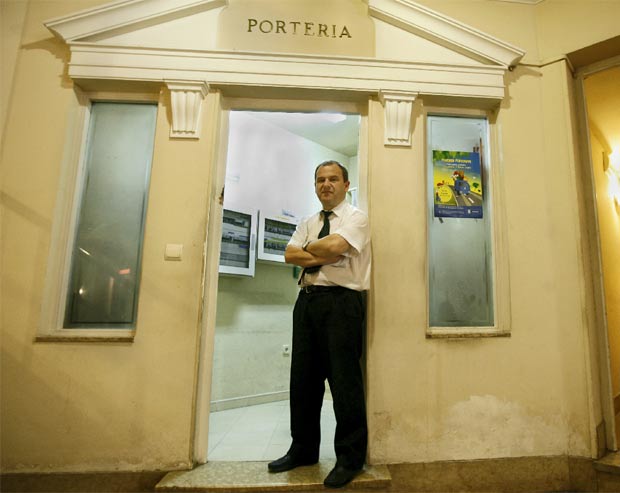
The portero

One of the most interesting things about Spain is that whilst it is incredibly modern in some respects (hello, superfast trains!), it is quaintly old fashioned in other ways. And nowhere is this more obvious than in the case of porteros

control-de-accesos_1

A portero or portera is a type of doorman or doorwoman, who sits at the entrance to a building, typically an apartment block. They are not a concierge, because they don’t do things like making reservations for the guests or helping them with their luggage. And they’re not a security guard, either, because whilst they watch the doorway to the apartment block, they don’t prevent people from gaining entry.

So, you’re probably thinking, what exactly does a portero do? Very good question, to which I don’t know the answer, although my observations suggest the best response is “Not a lot.”

Case in point. The apartment block where I live has a portero. From what I can gather, his daily tasks are:

  1. Taking out and bringing in the rubbish bins;
  2. Putting the mail in the correct letterboxes;
  3. Sweeping and mopping the floor if it’s dirty;
  4. Watering the two pot plants in the foyer;
  5. Letting visitors and any repairpeople into the building;
  6. Acting as an informal and unofficial supplier of privileged local intelligence (in other words, gossiping).

55c57705d923c1a0a28dfed0d0d65916_gossip-listen-comic-vintage-clipart-gossip_1300-731.jpeg

How long do these tasks take him? About 30 minutes is my guess, except for the last one, which can go on ALL DAY if you’re not careful. And yet the portero sits at his little desk for (wait for it) 8 hours a day, 5 days a week, doing pretty much nothing, except reading his book and playing on his iPad.

!!!!!!!!!!!!!!!!!!!!

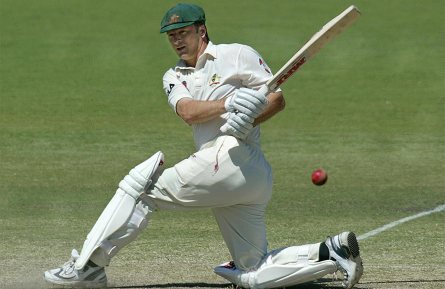
Talk about a good wicket (hello, Australian idiom! And hello, photo of Steve Waugh!).

05SteveWaugh.jpg

I’m not sure if the portero is paid a salary. I don’t think he is. But I know he is supplied with an apartment in the building. Said apartment has three bedrooms, and is exterior (so it’s nice and light), and would probably cost about 1,400 Euros a month to rent, so I guess this is a pretty good deal.

But I can’t help feeling that the days of porteros may very well be numbered. It simply doesn’t make economic sense to have a guy sitting in the building all day, doing virtually nothing.

And I’m still not certain if I feel incredibly jealous (Hey! I want to sit all day doing my own thing and being paid for it, complete with free apartment!) or incredibly sorry for him (Bloody hell, I would be bored out of my wits sitting in the apartment building all day, pretending to be busy, and I seriously don’t know how he lasts an hour, let alone a day!).

11good-bad

But I’m glad I got to see this quaint spectacle, even if its days are well and truly numbered.

The Feria de Abril

Last weekend, I went to Seville to visit the Feria de Abril (April Fair). Yes, it was May. But that’s only a small detail…

The Feria started in 1847 as a livestock trading fair, and is one of the major events in Seville. But it’s morphed from a traditional farm fair into what could best be described as “the Easter Show on steroids” (to steal my friend Julie’s expression).

With this in mind, I decided to write about some of the more interesting aspects of the Feria, should you be tempted to visit next year (and I very much recommend a trip!).

1.The casetas

The Feria is held at a kind of showground, and the main streets are lined with hundreds of casetas. These are tents or marquees, decorated in traditional Andalusian style, and are either public or private.

The public casetas (there’s not very many of these) are open to anyone. In contrast, the private casetas are rented for the duration of the Feria by families, groups of friends, professional associations, unions, political parties, clubs, etc, and are strictly invitation only. The private casetas tend to be smaller and more relaxed, and it’s easier to talk and meet people there. The only issue is that if you don’t know anyone in Seville, it is very hard to gain entry into these tents.

It’s hard to describe exactly what happens in the casetas, except to say that they’re a kind of weird mixture of a restaurant crossed with a bar crossed with a nightclub. Here’s a few pictures:

2. The Sevillanas

In the photos above, you can see people dancing in a particular way. This style of dance is called the Sevillanas, and consists of four parts, each with slightly different steps (to ensure maximum confusion). Sevillanas are great if you know what to do. But if you don’t, it’s probably best to sit and watch, as, well, there’s a time and a place for improvisation.

And this isn’t it.

Interestingly, as the night wore on, the Sevillanas tended to be discarded, and Enrique Iglesias appeared, so I guess there’s something for everyone…

3. The dresses

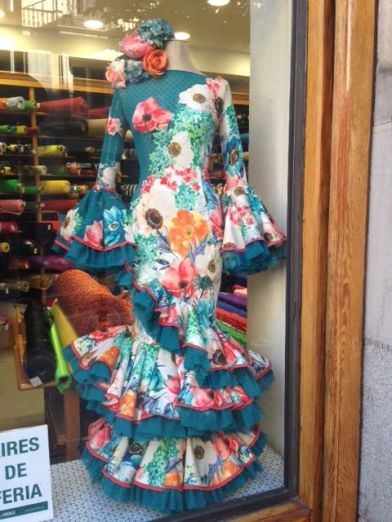
The thing I loved most about the Feria was the amazing dresses. Although it’s perfectly fine to turn up in your jeans or casual clothes, many of the attendees opt for what’s called a traje de gitana. These dresses are absolutely gorgeous. They are long, with lots of ruffles, and are so tight, it’s a miracle that the ladies are able to get into them. They are also ridiculously expensive, particularly if you get one made-to-measure.

IMG_0320

I saw this dress in a fabric shop in Madrid, and I wanted it SO BADLY.  But when I went in and asked the price, the man told me that it was only held together by pins, and was just there for decoration. I was devastated. I think it’s beautiful.

But it’s not just the dress which is important- you also have to make sure you have the right accessories, and I couldn’t help but wonder at the amount of time it must have taken some of the people to find earrings and flowers in EXACTLY the right colours to match their dresses.

4. The Rebujito

Needless to say, with all this dancing and partying, people are bound to get thirsty, and feel like a drink. The Feria has a special beverage called a rebujito, which is a mixture of sherry, lemonade, and lots of ice.

It is sold in jugs in the casetas, and drunk from plastic shot glasses, as in the picture below.

rebujito

This is all well and good, but as you can probably imagine, although the rebujitos don’t taste very strong, after 10 hours of partying at the Feria (and this is pretty normal), people start to feel their impact. And the impact can be quite intense.

Overall, I loved the Feria, but it’s not for the faint-hearted, and you’ve really got to be prepared. But would I go again? Yes, in a second!

Dogs in Madrid

One thing which has become very obvious to me since I arrived in Madrid is the somewhat privileged position of dogs in society…

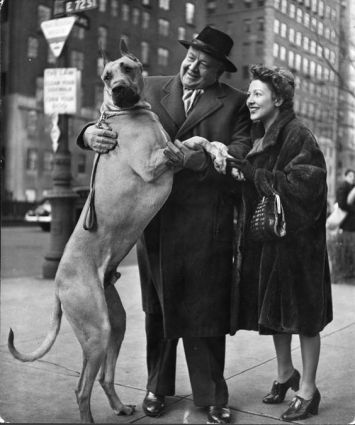
Although the majority of Madrileños seem to live in apartments, they absolutely LOVE their pet dogs. This adoration manifests in various guises, from the dogs walking around the city in coats emblazoned with “cutest pooch”, to others whose head fur has been coloured and put up in little ponytails. Or, my personal favourite, the Great Dane, which is the size of a small pony, whose owner religiously takes him for a daily walk through the city centre…

Kind of like this.

Except better.

b78785830e912e107badbfe18d83fdfd.jpg

Put simply, Madrid is a paradise for dog lovers. But perhaps the most interesting part of this canine friendly city is the places where you can take your pet pooch.  I’ve seen dogs on the Metro, in the shops, and even in restaurants. Quite a few cafes across town have little signs in the window saying “Well-behaved dogs welcome.”

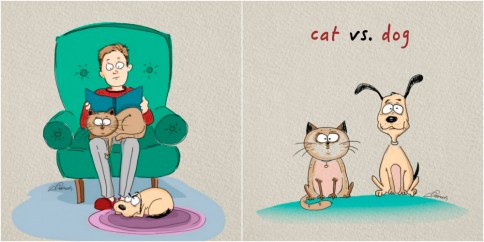
This is all well and good if you like dogs. But (and I expect the defriending to start now) I’ve got to admit that I am not a fan of canines. I have always preferred cats to dogs, because they are smaller and less frightening and they don’t have big teeth.

But I seem to be in a minority here. Dogs are everywhere!

Case in point…

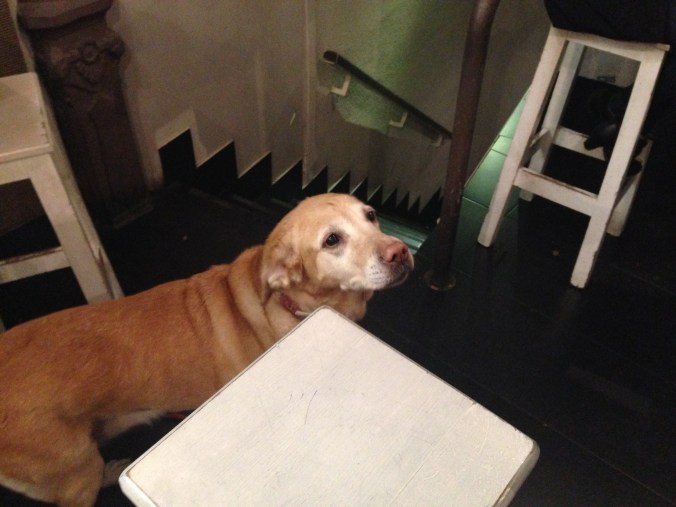
One day I went to a bar with a friend. We were having a great time, until I heard some creepily persistent heavy breathing beside me. Ugh! Looking across, I expected to see some sleazy individual staring at me. But instead, I saw a dog, seated uncomfortably close by, slobbering and drooling on the floor…

img_8206

Dog in bar.

Or the time I visited my favourite store, and found a beloved perro standing right in front of the cash register (surreptitious shot below…).

IMG_9449 (2).jpg

Unfortunately, the strong presence of dogs has a rather unpleasant counterpart.

Namely, the strong presence of dog droppings…

Although Madrileños are supposed to pick up after their hounds, this rule is somewhat, well, laxly enforced. Consequently, an early morning stroll through the city becomes akin to an obstacle course, as the unfortunate pedestrian attempts to dodge the piles of poo on the footpath.

This has led to the appearance of graphic signs such as these…

img_8056

Roughly translated, this means “Good luck is having a clean suburb.” And let me just say, after I’ve stepped in the hundredth pile of dog droppings, and I’m not even at the end of my street (seriously, it’s THAT BAD!), cats are starting to look better and better by the second!

But perhaps I’m a little biased…

cat-versus-dogs_0.jpg