Today being Thursday, it must be time for the Cultural Wednesdays post…
[Aside-I hope people like the Cultural Wednesdays posts- my mum (Hi Mum!) says that they’re not as interesting as the ones where I talk about things going pear-shaped. That might be true, but I think it’s important to write about some of the things I’ve seen in case anyone wants to come to Madrid to visit me (hint, hint!). And, well, sometimes things aren’t a TOTAL disaster, so I think I should mix it up a bit 😉 ]
Anyway, yesterday afternoon, I went to the museum and house of Lope de Vega. This museum was recommended by my colleague, Charro, who helps me with my Spanish, so I thought I should make an effort to go. I tried to visit 2 weeks ago, but the guard told me that because the house is so old, they only permit 10 people to visit at once, and that you have to be on a guided tour.
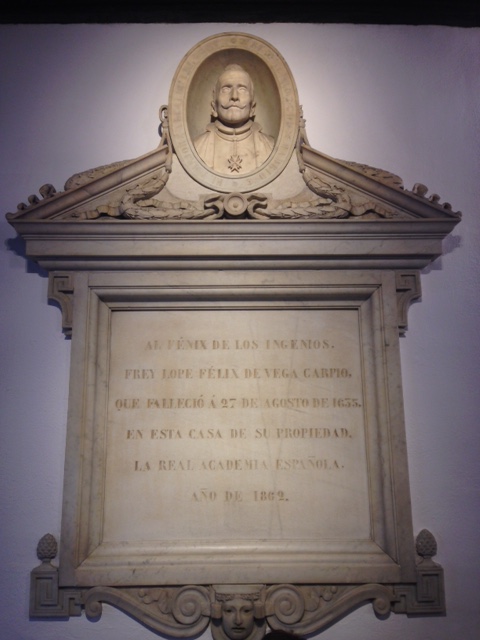
So, I booked my tour. I didn’t realise that you could book one in English, and so I found myself, unwittingly, on the Spanish tour. Oh. Dear.
Imagine the scene- me and 9 fluent Spanish speakers, wandering around, as the guide pointed out the artifacts. I nodded and laughed at what I hoped were the appropriate places, and tried to snigger knowingly when one of the other visitors passed some personal asides to me.
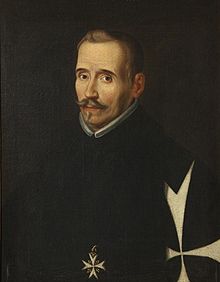
For those, like me, who aren’t familiar with Lope de Vega’s work, he was a Spanish playwright, poet, and author from the same time as Cervantes (16th Century). He was famous for the amount of his output (he was likened to a writing machine), and for his rather scandalous love affairs (he had 16 children…and he was a priest for a while). He wrote over a thousand works in his lifetime, following the adage of “quantity, not quality”, and seemed to live according to his own wishes, rather than society’s norms.
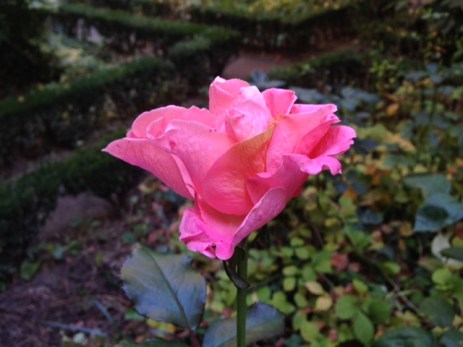
The house was really interesting, with a beautiful garden, and rather perilous steps (they were the original ones). We saw Lope de Vega’s writing room, the chapel where he spent his days when he became a priest, and his bedroom.


We also learnt a lot about his personality. He seemed to be a rather nasty and vindictive character and after one of his many love affairs went wrong, he ended up in trouble with the law after writing a scandalous piece of work about his ex and her family! Although given the quote “There is no greater glory than love, nor any greater punishment than jealousy”, perhaps this is not a surprise…
Overall, I really liked the tour. Even though I knew nothing about Lope de Vega, it was wonderful to learn about his quirks, and to see what life was like in his time. I would definitely recommend visiting the house to everyone, although it’s important to book a bit in advance, and to speak some Spanish (you can specifically ask for an English speaking tour, but they put me in the Spanish one, on the basis of my email- I think this is a win!).





 Helen in Spain